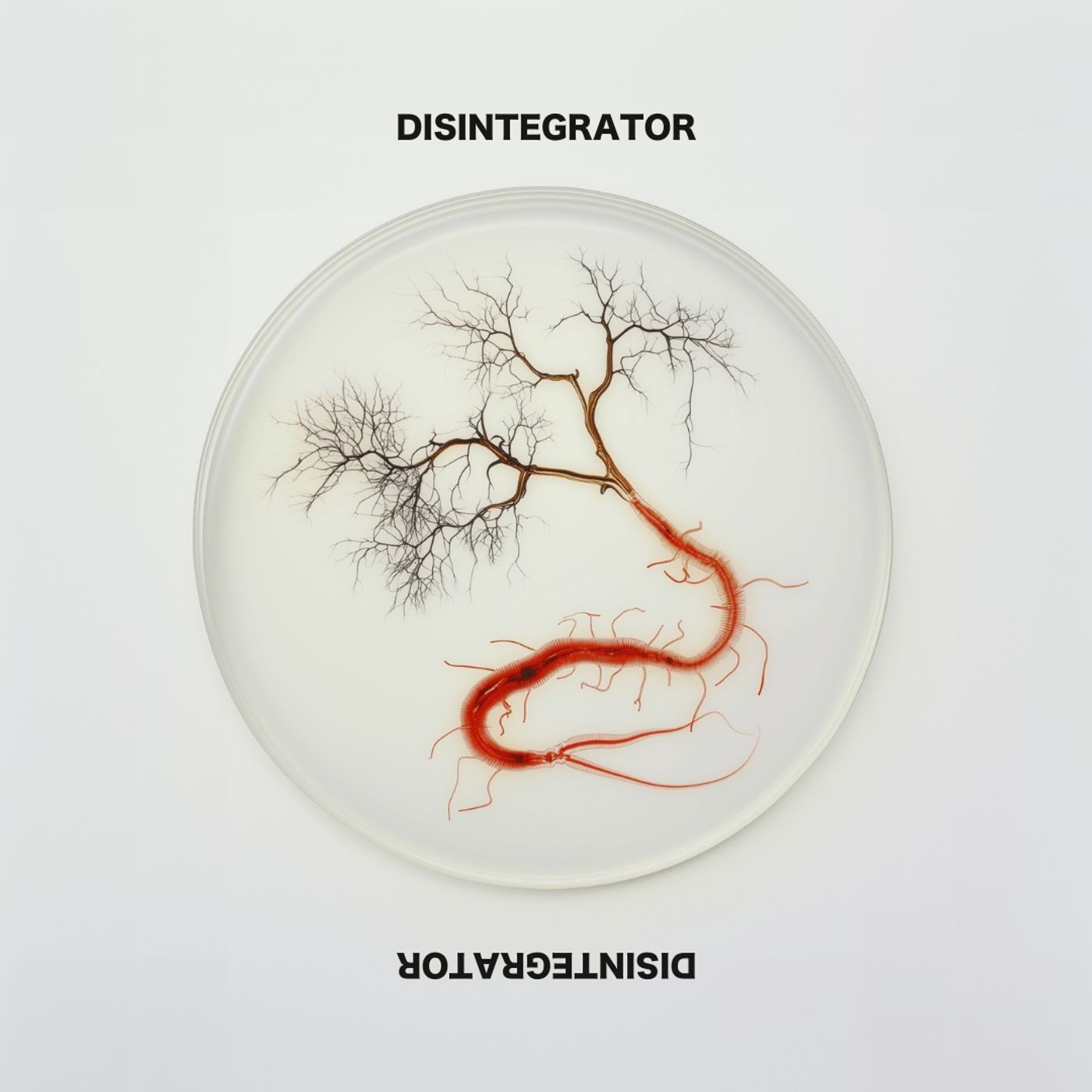
Luciana Parisi has produced some of the 21st century’s most daring and bold work in the theories of cybernetics, information, and computation. Her work has had a major impact on both Marek and Roberto’s artistic practices, specifically her early work in the inorganic components of human reproduction. Just a brief content note — we mention some complex topics including consent and suicide at the top of the pod, specifically in the context of David Marriott’s concept of “Revolutionary Suicide”. These concepts are not extensively discussed throughout, but are nonetheless heavy topics. We strongly recommend three texts in parallel with this conversation:Probably Marek’s favorite piece of theory: Abstract Sex: Philosophy, Biotechnology and the Mutations of DesireA book more specifically scoped to the subject of this conversation, which attacks the biophysicalist metaphors at the ground of how AI research markets itself: Contagious Architecture: Computation, Aesthetics, and SpaceThe essay: The Alien Subject of AI.Some references from the conversation that are likely interesting to any listener:If you haven’t read Octavia Butler’s Xenogenesis (renamed Lilith’s Brood), we strongly recommend these amazing pieces of science fiction.If you’re unfamiliar with the CCRU, play around on the CCRU website and buy this unhinged compendium from our friends at Urbanomic (they have a super sexy new edition just out now). If you haven’t read Sadie Plant’s Zeroes + Ones: Digital Women and the New Technoculture, it’s seriously an essential read if you’re interested in computation.We briefly make fun of the feature film “The Creator”, which it looks like you can stream on major platforms. We mention this in the context of Delueze and Guattari’s “War Machine” — we recommend their “Nomadology: The War Machine” (if you follow Marek on Instagram, you’ll note that he’s obsessed with the exteriority of war machines from the state).When we start to talk about information theory, Luciana mentions Claude Shannon (one of the fathers of modern information theory), Cecile Malaspina (“An Epistemology of Noise”), and Karen Barad (“What is the Measure of Nothingness?”).Francois Laruelle is a major influence to Luciana here, in her chapter in Choreomata, and elsewhere. His corpus of work is famously intractable, but her chapter in Choreomata is a good way in.Luciana mentions Holly Herndon’s work (we strongly recommend Holly+ and https://haveibeentrained.com/, alongside her and Mat Dryhurst’s podcast, which was a huge inspiration to us when starting Disintegrator).Everyone should read Hito Steyerl’s work “Mean Images” on NLR as they should Sylvia Wynter’s “Towards the Autopoetic Turn/Overturn, its Autonomy of Human Agency and Extraterritoriality of (Self-)Cognition”.
No persons identified in this episode.
This episode hasn't been transcribed yet
Help us prioritize this episode for transcription by upvoting it.
Popular episodes get transcribed faster
Other recent transcribed episodes
Transcribed and ready to explore now
3ª PARTE | 17 DIC 2025 | EL PARTIDAZO DE COPE
01 Jan 1970
El Partidazo de COPE
13:00H | 21 DIC 2025 | Fin de Semana
01 Jan 1970
Fin de Semana
12:00H | 21 DIC 2025 | Fin de Semana
01 Jan 1970
Fin de Semana
10:00H | 21 DIC 2025 | Fin de Semana
01 Jan 1970
Fin de Semana
13:00H | 20 DIC 2025 | Fin de Semana
01 Jan 1970
Fin de Semana
12:00H | 20 DIC 2025 | Fin de Semana
01 Jan 1970
Fin de Semana