Menu
Sign In Search Podcasts Charts People & Topics Add Podcast API Pricing
Description

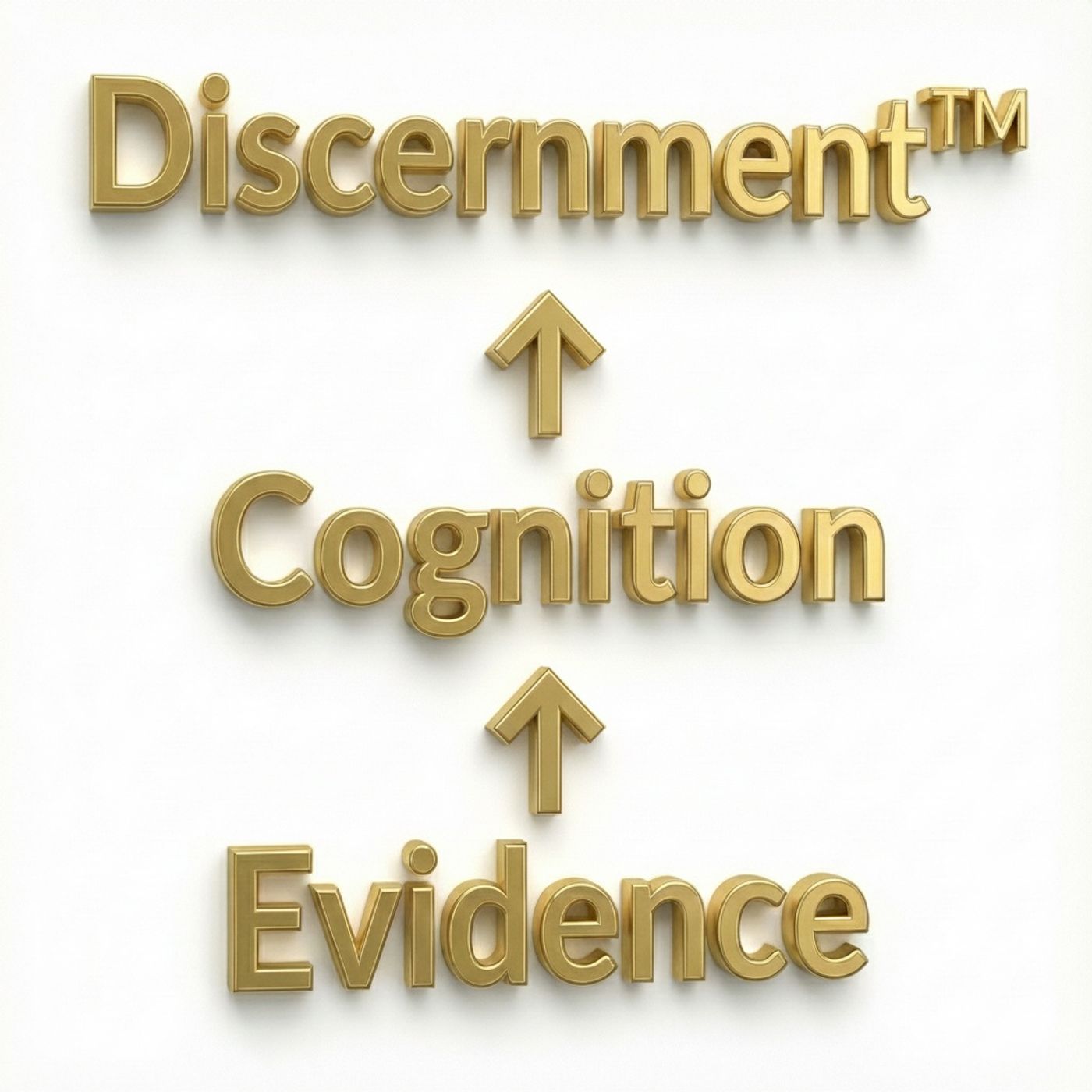
The provided text, an article by Greg Twemlow, focuses on shifting the human-AI interaction from mere prompting to a deeper, more reflective partnership. The author argues that the main obstacle to meaningful AI use is the tendency for humans to rush their thinking, operating at a machine-like tempo rather than a natural, reflective pace. To achieve what he terms "Deep Human+AI Collaboration™" and "Human+AI Deep Cognitive Partnership™," individuals must slow down and engage in a recursive cycle—context, articulation, critique, reflection, iteration—which he identifies as the "mechanism of emergent insight." This process ensures that the human provides the necessary meaning and judgment (upstream), allowing the AI to amplify and extend the reasoning (downstream) rather than just generating superficial answers. Ultimately, the source posits that genuine cognitive leverage and high-value use cases emerge not from speed, but from the human capacity to pause and gain clarity. Read the article.About the Author - Greg Twemlow writes and teaches at the intersection of technology, education, and human judgment. He works with educators and businesses to make AI explainable and assessable in classrooms and boardrooms — to ensure AI users show their process and own their decisions. His cognition protocol, the Context & Critique Rule™, is built on a three-step process: Evidence → Cognition → Discernment — a bridge from what’s scattered to what’s chosen. Context & Critique → Accountable AI™. © 2025 Greg Twemlow. “Context & Critique → Accountable AI” and “Context & Critique Rule” are unregistered trademarks (™).

Audio
Featured in this Episode

No persons identified in this episode.

Transcription

This episode hasn't been transcribed yet

Help us prioritize this episode for transcription by upvoting it.

0 upvotes
🗳️ Sign in to Upvote

Popular episodes get transcribed faster

Comments

There are no comments yet.

Please log in to write the first comment.