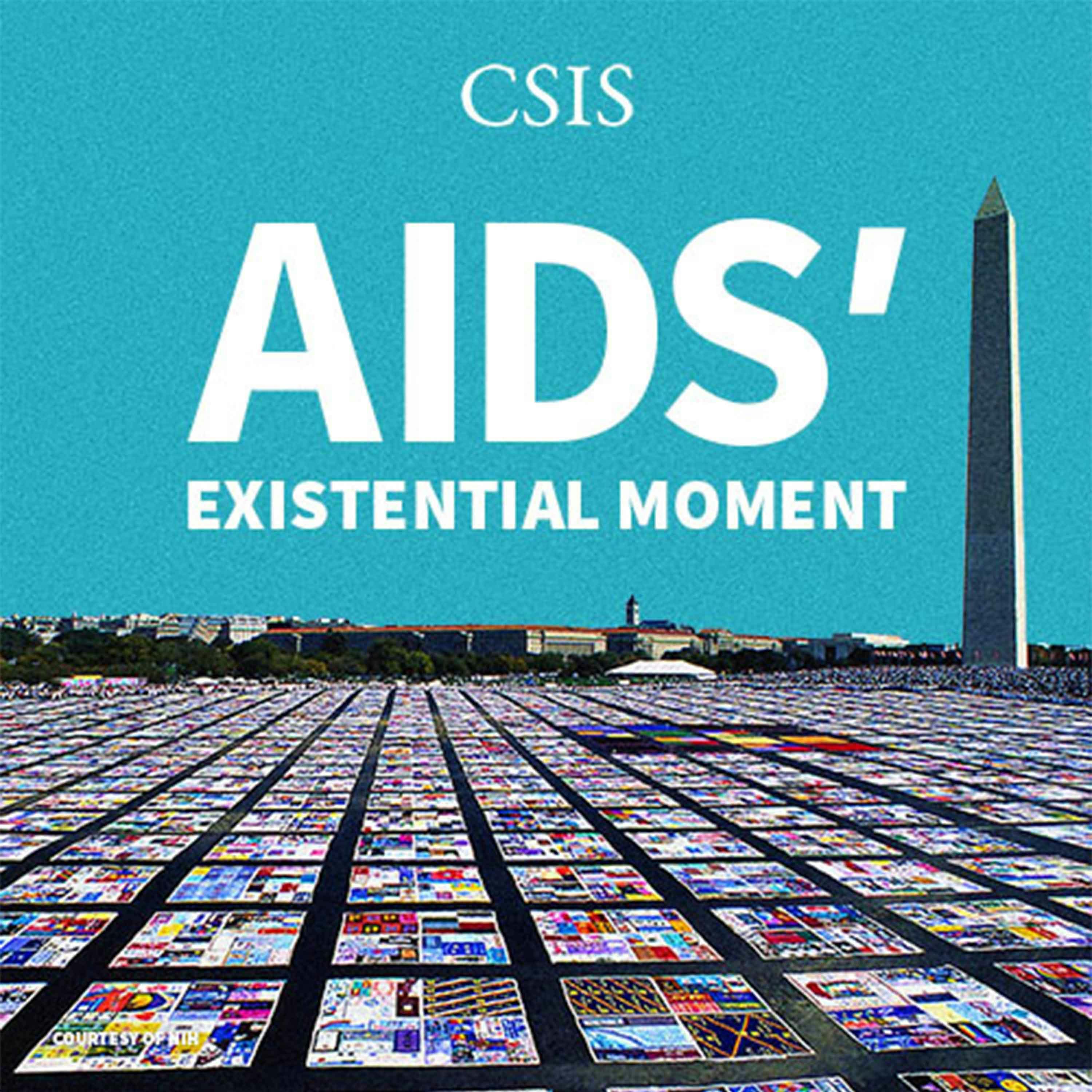
In this episode, CSIS Senior Associate Jeffrey L. Sturchio speaks with Matt Kavanagh, Deputy Executive Director for Policy, Advocacy, and Knowledge at UNAIDS, where he is responsible for the organization’s work to advance policy, law and political change to end the AIDS pandemic. Matt begins by noting some of the recent advances in the science of HIV prevention and treatment (such as new tools for long-acting HIV prophylaxis), which are causes for optimism in the global response to the HIV pandemic. At the same time, there are worrying trends in new HIV infections due in part to the impact of COVID-19 and economic crises on country investments in HIV programs. Despite these challenges, some countries are still making encouraging progress in fighting HIV/AIDS. As Kavanagh observes, “science doesn’t implement itself,” and we need to look to politics and the enabling policy environment to understand why some countries are doing better than others at addressing HIV/AIDS. Countries as diverse as Botswana, Nigeria, and Thailand have responded effectively: by comparing their approaches, we find that a combination of political leadership, partnerships, community engagement, structural interventions, and changes in law and policy help to explain their success. Another important factor in understanding success in addressing HIV/AIDS is the role of vibrant civil society and strong community response to the epidemic. Matt also discusses the importance of ending inequalities to end the AIDS epidemic: we need to know where the gaps in coverage are – by geography, income level, or key populations – and tailor interventions that work to close the gaps. Matt concludes by calling for more investment in global public goods, not only to sustain the AIDS response, but also to be better prepared for future global pandemics. Matthew M. Kavanagh has worked internationally for more than 20 years at the intersection of global health, politics and law and comes to UNAIDS on secondment from Georgetown University, where he holds faculty appointments in international health and law and is a director at the O’Neill Institute for National & Global Health Law.
No persons identified in this episode.
This episode hasn't been transcribed yet
Help us prioritize this episode for transcription by upvoting it.
Popular episodes get transcribed faster
Other recent transcribed episodes
Transcribed and ready to explore now
Eric Larsen on the emergence and potential of AI in healthcare
10 Dec 2025
McKinsey on Healthcare
Reducing Burnout and Boosting Revenue in ASCs
10 Dec 2025
Becker’s Healthcare -- Spine and Orthopedic Podcast
Dr. Erich G. Anderer, Chief of the Division of Neurosurgery and Surgical Director of Perioperative Services at NYU Langone Hospital–Brooklyn
09 Dec 2025
Becker’s Healthcare -- Spine and Orthopedic Podcast
Dr. Nolan Wessell, Assistant Professor and Well-being Co-Director, Department of Orthopedic Surgery, Division of Spine Surgery, University of Colorado School of Medicine
08 Dec 2025
Becker’s Healthcare -- Spine and Orthopedic Podcast
NPR News: 12-08-2025 2AM EST
08 Dec 2025
NPR News Now
NPR News: 12-08-2025 1AM EST
08 Dec 2025
NPR News Now