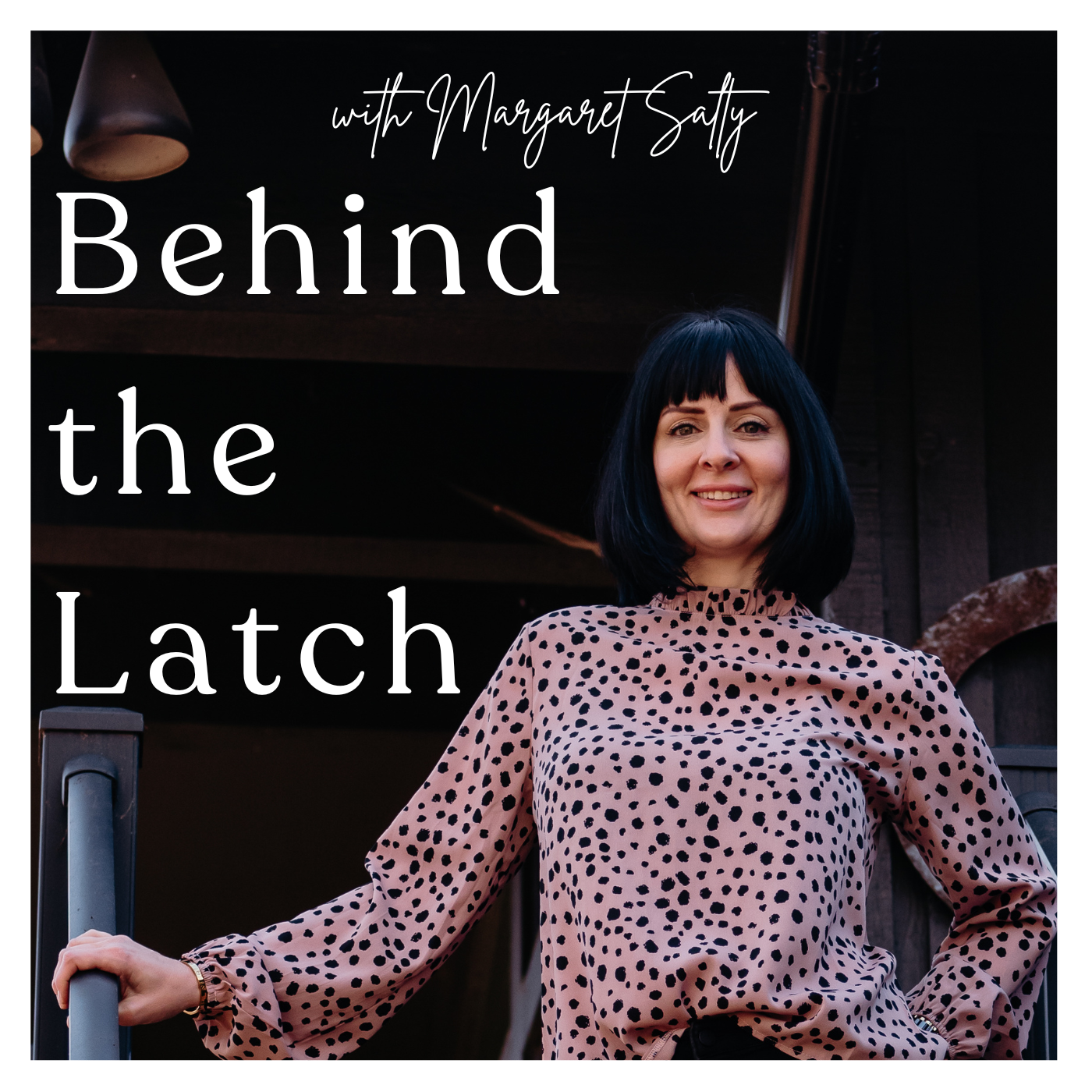
In this episode of Behind the Latch, Margaret Salty interviews Dr. Lisa Anders, assistant professor at the University of North Carolina at Greensboro and IBCLC. Together, they explore Dr. Anders’ groundbreaking research on flange sizing for pumping parents—an area that has been historically under-researched and inconsistently practiced. Dr. Anders shares how using nipple tip diameter rather than base diameter may improve comfort, milk expression, and overall pumping experience.They discuss the practical implications of her findings for private practice IBCLCs, how to apply the research in clinical care, and what this means for the future of pumping support.Anders, L., Frem, J.M., & McCoy, T.P. (2024). Flange Size Matters: A Comparative Pilot Study of the Flange FITS Guide Versus Traditional Sizing Methods. Journal of Human Lactation, 41(1). https://doi.org/10.1177/08903344241296036Lisa’s Journey into Lactation ResearchDr. Anders shares how:Her own experience as a mother and lactation consultant led her to question standard flange fitting guidance.She noticed patterns of discomfort and underperformance in pump use that weren’t being addressed in the literature.Her academic background in health and human sciences helped her design a pilot study to explore alternative approaches to flange sizing.Why Flange Fit MattersThey discuss:How incorrect flange sizing contributes to nipple pain, reduced output, and early weaning.Why standard recommendations based on base diameter may not reflect the functional part of the nipple used during pumping.How measuring nipple tip diameter (as little as 3–5mm) and using smaller flanges improved outcomes for many of her study participants.Clinical Application and Research GapsDr. Anders explains:How IBCLCs in private practice can begin to implement this approach now, even before larger-scale studies are done.The importance of individualized care, particularly for exclusive pumpers who may struggle in silence.Why pump support deserves the same evidence-based attention as direct breastfeeding.Equity and Access in Pumping SupportThey explore:How a lack of evidence-based flange fitting disproportionately impacts marginalized communities.The cost and access barriers involved in finding the right flange—and how that contributes to inequities in breastfeeding outcomes.The need for culturally responsive, inclusive pumping support.Looking AheadDr. Anders shares:What future research she hopes to conduct to validate and expand her pilot findings.Why community-based IBCLCs play a vital role in gathering observational data and sharing clinical insights.Her encouragement to providers to challenge assumptions and keep asking: is this really working for our clients?Advice for IBCLCs and Perinatal ProfessionalsDr. Anders encourages providers to:Reconsider flange fitting practices with a focus on comfort, efficiency, and individualized care.Learn more about pump mechanics and nipple anatomy.Advocate for more inclusive and accessible tools to support all pumping parents.Guest Info:Dr. Lisa Anders is an assistant professor at UNC Greensboro and a board-certified lactation consultant. Her research focuses on maternal health, infant feeding, and improving care experiences through interdisciplinary and inclusive approaches.📘 LinkedIn: Dr. Lisa Anders📚 Read the study: Anders, L....
No persons identified in this episode.
This episode hasn't been transcribed yet
Help us prioritize this episode for transcription by upvoting it.
Popular episodes get transcribed faster
Other recent transcribed episodes
Transcribed and ready to explore now
3ª PARTE | 17 DIC 2025 | EL PARTIDAZO DE COPE
01 Jan 1970
El Partidazo de COPE
Buchladen: Tipps für Weihnachten
20 Dec 2025
eat.READ.sleep. Bücher für dich
BOJ alza 25pb decennale sopra 2%, Oracle vola con accordo Tik Tok, 90 mld eurobond per Ucraina | Morning Finance
19 Dec 2025
Black Box - La scatola nera della finanza
365. The BEST advice for managing ADHD in your 20s ft. Chris Wang
19 Dec 2025
The Psychology of your 20s
LVST 19 de diciembre de 2025
19 Dec 2025
La Venganza Será Terrible (oficial)
Cuando la Ciencia Ficción Explicó el Mundo que Hoy Vivimos
19 Dec 2025
El Podcast de Marc Vidal