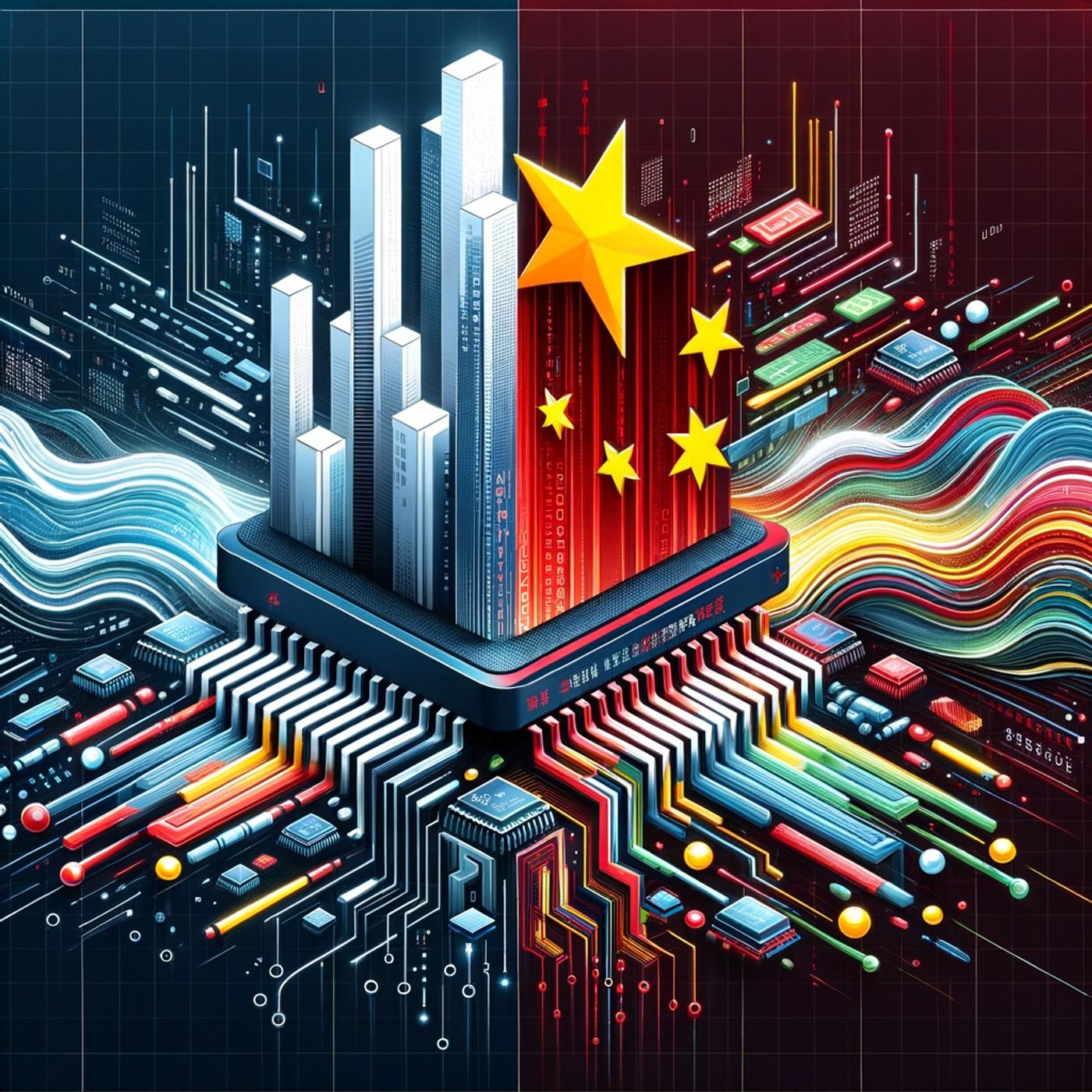
Beijing Bytes: US-China Tech War Updates
Revenge Chips, Data Leaks, and a Tech Cold War Mess: Whos Really Winning?
15 Sep 2025
This is your Beijing Bytes: US-China Tech War Updates podcast.Hey listeners, I'm Ting, and welcome to Beijing Bytes. Let me tell you, the past two weeks have been absolutely wild in the US-China tech war space, and honestly, I'm questioning whether anyone's actually winning this chess match anymore.Just two days ago on September 13th, Beijing dropped what I'm calling the "revenge investigation special." China's Ministry of Commerce launched not one, but two probes targeting American semiconductor companies. They're going after US analog chips from heavyweights like Texas Instruments and ON Semiconductor, claiming these companies are dumping products while US import volumes surged over 30 percent between 2022 and 2024. The timing? Chef's kiss perfect, because these announcements came right before Treasury Secretary Scott Bessent sits down with Chinese Vice Premier He Lifeng in Madrid this week.But here's where it gets spicy, listeners. While everyone's focused on chips, we had the data breach of the century on September 11th. Over 600 gigabytes of China's Great Firewall documents got leaked online, exposing the inner workings of the world's most sophisticated censorship machine. We're talking source code, work logs, and evidence that Geedge Networks, led by Fang Binxing, the actual Father of the Great Firewall, has been exporting surveillance tech way beyond China's borders.Then there's the Salt Typhoon saga that's gotten seriously messy. What started as targeted espionage in mid-2023 has exploded into a massive operation affecting millions of Australians and hitting dozens of countries. The Australian Signals Directorate just attributed this monster campaign to Beijing's Ministry of State Security and the People's Liberation Army.Meanwhile, the export control game is backfiring spectacularly. Remember DeepSeek? That Chinese AI startup just wiped 600 billion dollars off Nvidia's market cap in January by proving you can build world-class AI models with way fewer, less advanced chips. Industry experts are now saying these restrictions might actually be accelerating Chinese innovation rather than slowing it down.The semiconductor bundling technique Chinese firms are using is fascinating. They're linking hundreds of export-compliant chips together to match the power of restricted advanced GPUs. Sure, it's more expensive and energy-intensive, but as one expert noted, Chinese firms are happy to pay that price.Looking ahead, these Madrid talks aren't going to solve much. Both sides are doubling down, and the semiconductor industry is bracing for prolonged uncertainty. The real question isn't who's winning anymore, but whether this tech cold war is pushing both nations toward more dangerous territory.Thanks for tuning in, and don't forget to subscribe for more Beijing Bytes updates. This has been a quiet please production, for more check out quiet please dot ai.For more http://www.quietplease.aiGet the best deals https://amzn.to/3ODvOtaThis content was created in partnership and with the help of Artificial Intelligence AI
No persons identified in this episode.
This episode hasn't been transcribed yet
Help us prioritize this episode for transcription by upvoting it.
Popular episodes get transcribed faster
Other recent transcribed episodes
Transcribed and ready to explore now
3ª PARTE | 17 DIC 2025 | EL PARTIDAZO DE COPE
01 Jan 1970
El Partidazo de COPE
Buchladen: Tipps für Weihnachten
20 Dec 2025
eat.READ.sleep. Bücher für dich
BOJ alza 25pb decennale sopra 2%, Oracle vola con accordo Tik Tok, 90 mld eurobond per Ucraina | Morning Finance
19 Dec 2025
Black Box - La scatola nera della finanza
365. The BEST advice for managing ADHD in your 20s ft. Chris Wang
19 Dec 2025
The Psychology of your 20s
LVST 19 de diciembre de 2025
19 Dec 2025
La Venganza Será Terrible (oficial)
Cuando la Ciencia Ficción Explicó el Mundo que Hoy Vivimos
19 Dec 2025
El Podcast de Marc Vidal