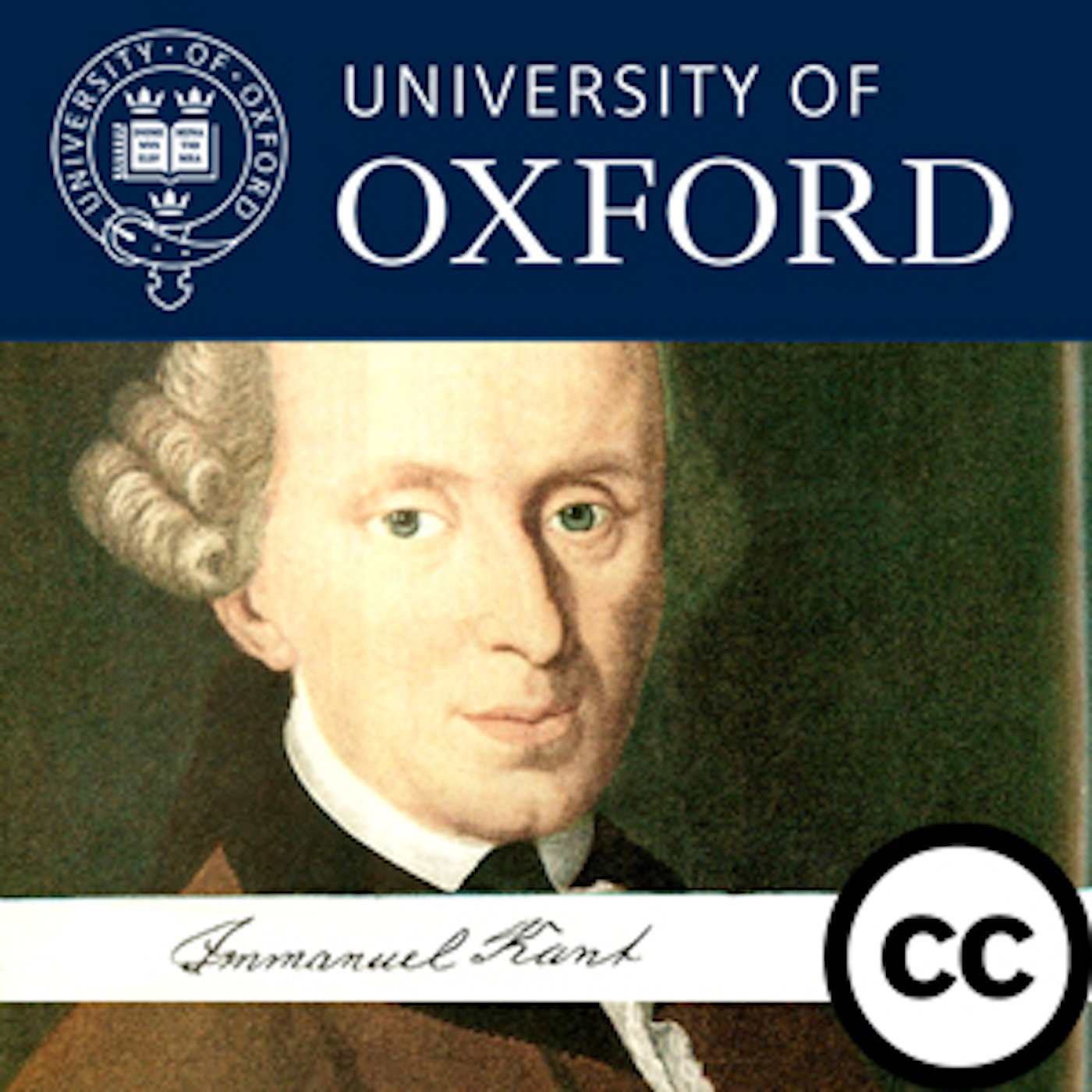
Kant's Critique of Pure Reason
Activity Overview
Episode publication activity over the past year
Episodes
The discipline of reason: The paralogisms and Antinomies of Pure Reason.
16 Mar 2011
Contributed by Lukas
Lecture 8/8. Reason, properly disciplined, draws permissible inferences from the resulting concepts of the understanding. The outcome is knowledge. Wh...
The "Self" and the Synthetic Unity of Apperception
16 Mar 2011
Contributed by Lukas
Lecture 7/8. Kant argues that: "The synthetic unity of consciousness is... an objective condition of all knowledge. It is not merely a condition that ...
Concepts, judgement and the Transcendental Deduction of the Categories
16 Mar 2011
Contributed by Lukas
Lecture 6/8. Empiricists have no explanation for how we move from "mere forms of thought" to objective concepts. The conditions necessary for the know...
Idealisms and their refutations
16 Mar 2011
Contributed by Lukas
Lecture 5/8. The very possibility of self-awareness (an "inner sense" with content) requires an awareness of an external world by way of "outer sense"...
How are a priori synthetic judgements possible?
16 Mar 2011
Contributed by Lukas
Lecture 4/8. Kant claims that, "our sense representation is not a representation of things in themselves, but of the way in which they appear to us. H...
Space, time and the "Analogies of Experiences"
16 Mar 2011
Contributed by Lukas
Lecture 3/8. Kant's so-called "Copernican" revolution in metaphysics begins with the recognition of the observer's contribution to the observation. Th...
The broader philosophical context
16 Mar 2011
Contributed by Lukas
Lecture 2/8. The significant advances in physics in the 17th century stood in vivid contrast to the stagnation of traditional metaphysics, but why sho...
Just what is Kant's "project"?
16 Mar 2011
Contributed by Lukas
Lecture 1/8. Both sense and reason are limited. Kant must identify the proper mission and domain of each, as well as the manner in which their separat...