Menu
Sign In Search Podcasts Charts People & Topics Add Podcast API Pricing
Podcast Image

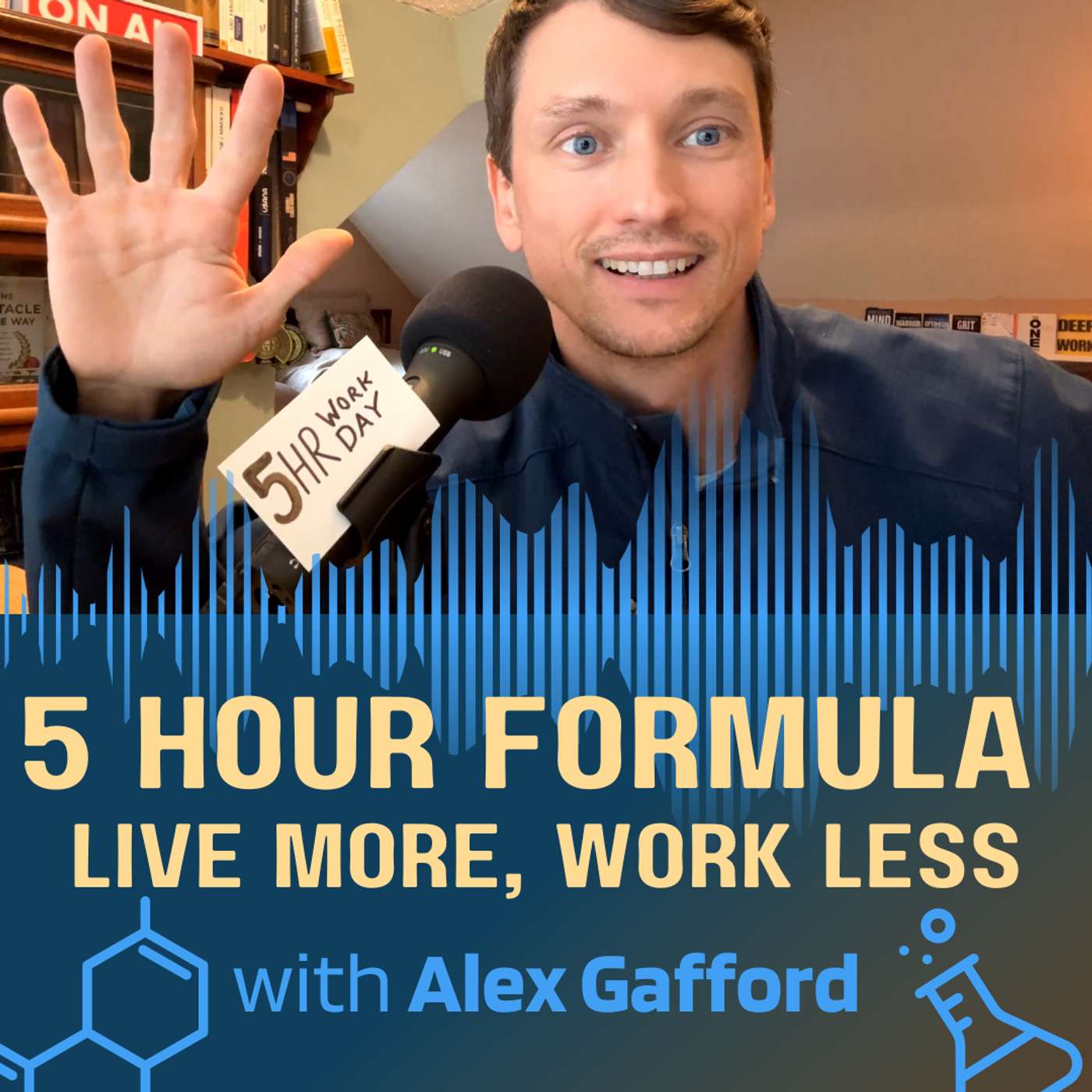
5-Hour Formula: Live More, Work Less

[#01] How I Found 3 Extra Hours a Day Without Sacrificing My Salary

27 Feb 2025

Description

In this episode, I share how I discovered that a 5-hour workday can be just as productive as an 8-hour one—without sacrificing income. I break down the four key shifts in thinking that transformed my relationship with time, helping me unlock an extra three hours per day.🔹 How we restructured work to maintain productivity in fewer hours🔹 The surprising history of the 40-hour workweek and why it's outdated🔹 How to rethink time in work, self-improvement, screens, and money🔹 A powerful experiment you can try today to reclaim your timeBy the end of this episode, you’ll have a clear roadmap to optimize your time and start designing a life filled with meaning, focus, and freedom.Key Takeaways:🕰 1. How You Think About Time & WorkWork should be measured by results, not hours.The 40-hour workweek is a relic of the industrial age—modern technology allows us to be more productive in less time.The 5-hour workday experiment revealed just how much time is wasted on distractions like social media, meetings, and unnecessary tasks.Freeing up 780 hours per year (or 3 months!) by eliminating wasted time.💡 2. How You Think About Time & Self-ImprovementWith an extra 3 hours per day, I designed my schedule to prioritize:✔ 1 hour for family & relationships✔ 1 hour for health & fitness✔ 1 hour for learning & skill-buildingImplemented daily walks with my wife and a weekly no-miss date night.Used the extra time to finally learn Spanish, proving that small daily investments compound over time.📱 3. How You Think About Time & ScreensThe average American watches 3+ hours of TV daily and spends 4-5 hours on their phone.At work, we lose 2+ hours daily to non-work distractions, like social media.Conduct an Ohio State Experiment: Track your screen time and compare it to your list of things you "never have time for." You may already have the time—you’re just spending it on the wrong things!💰 4. How You Think About Time & MoneyTime > Money. You can always make more money, but you can’t make more time.The concept of Time Affluence (from Harvard’s Ashley Whillans) shows that protecting our time brings more happiness than making more money.Consider this: Over a lifetime, wasted screen time could add up to 1,000+ weeks—do you really want to spend that much of your life scrolling and watching TV?Try This Experiment: Reclaim Your TimeAt the end of the episode, I give you an experiment to uncover how you can reclaim lost time.1️⃣ List out the 3 big categories:Health (e.g., daily workouts, better sleep)Relationships (e.g., more family time, date nights)Learning (e.g., a new skill, reading, or language)2️⃣ Write down what you’d do if you had more time in each category.3️⃣ Reflect on how your life would change if you committed to these things daily.4️⃣ Compare your time spent on distractions (screen time, TV, etc.) to see how much time you could reclaim.The challenge: Start investing your time intentionally and watch how it transforms your life.Resources Mentioned:📖 The Distraction Addiction – Alex Pang📖 Time Smart – Ashley Whillans🌍 4 Day Week Global – Research & case studies on reduced work hoursShare Your Results!Did this experiment open your eyes to how you're spending time? What did you realize?💬 Message me on Linkedin@ Alex Gafford and let’s talk about it!📌 Subscribe & ReviewIf you enjoyed this episode, please subscribe and leave a review—it helps us reach more people looking to reclaim their time!🔜 Next Episode: Meet The Founder Who Increased Revenue by Working Less | Dave Rhoades🎧 Listen now and start reclaiming your time!

Audio
Featured in this Episode

No persons identified in this episode.

Transcription

This episode hasn't been transcribed yet

Help us prioritize this episode for transcription by upvoting it.

0 upvotes
🗳️ Sign in to Upvote

Popular episodes get transcribed faster

Comments

There are no comments yet.

Please log in to write the first comment.