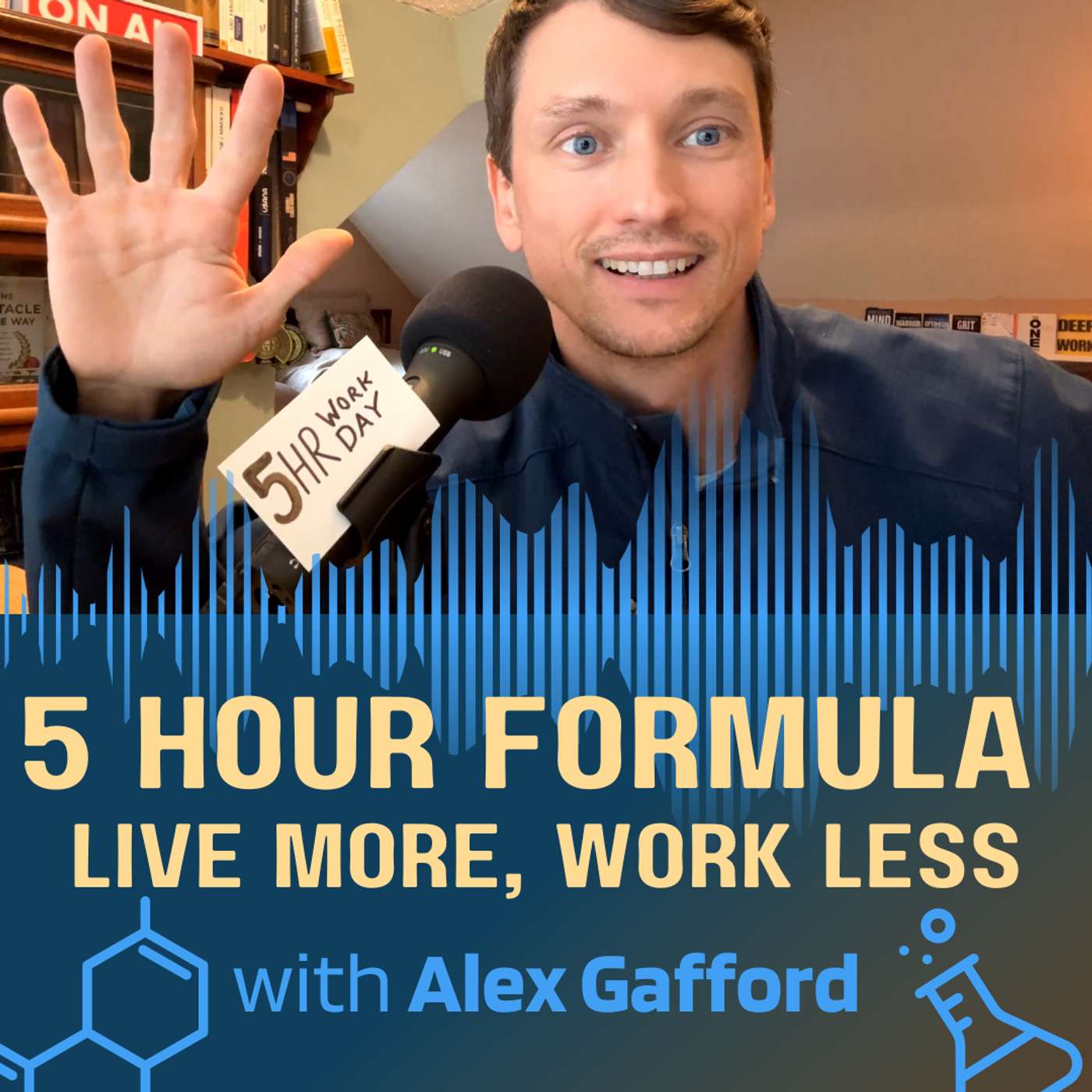
5-Hour Formula: Live More, Work Less
[#11] Energy Is the Multiplier: How to Get 8 Hours of Work Done in 5
28 Aug 2025
Managing time is important, but managing energy is the multiplier. In this episode, Alex explains why your physiology drives your psychology, and how energy fundamentals like sleep, diet, and movement are the foundation for focus. He also breaks down the recovery protocols that sustain performance inside a 5-Hour Workday.This isn’t just theory, it’s a playbook for becoming a cognitive athlete. You’ll learn how to generate, protect, and recover your energy so you can deliver eight hours of output in just five.What You’ll Learn in This EpisodeWhy energy management > time management in a shorter workday.The big three energy fundamentals — sleep, diet, and exercise — and how to personalize them.How movement fuels creativity and why sitting all day + one gym session mimics the worst of spaceflight (NASA research).The role of ultradian rhythms and why breaks must be restorative, not just time away.Why nature is the ultimate recovery tool (Marc Berman’s research).The role of the Default Mode Network in creativity and problem-solving.How Alex “trains for recovery” the same way he trains for Spartan races. Today’s ExperimentsChoose one experiment this week (or both, if you’re ambitious):1. The Wind-Down Alarm (Sleep)Set an alarm one hour before bed.Use it as your cue to start winding down: dim lights, shut screens, stretch, or read.Track your next-day focus and energy. Bonus: use a sleep tracker.2. The Nature Break (Recovery)After a 90-minute work block, take a 20-minute walk in nature.No phone. No talking. Just notice your surroundings.Rate your focus before and after.Key TakeawayTime management matters. But energy is the multiplier.Your physiology drives your psychology — and how you manage your energy determines your mood, creativity, decision-making, and ultimately the quality of your work.Pick one fundamental — sleep, diet, exercise, or recovery — and start experimenting. That’s how you train like a cognitive athlete and get more done in less time.References & ResourcesMatthew Walker — Why We SleepJim Loehr & Tony Schwartz — The Power of Full EngagementJohn Ratey — Spark: The Revolutionary New Science of Exercise and the BrainMarc Berman — Nature and the Mind (attention restoration research)Alex Pang — Rest and ShorterJoan Vernikos — Sitting Kills, Moving HealsTom Rath — Eat Move Sleep Connect with AlexLinkedIn: Linkedin.com/Alex-GaffordWebsite: 5-HourFormula.comPodcast: The 5-Hour Formula (Apple, Spotify, etc.)Coming Next WeekIn the next episode, we’ll zoom out from energy and recovery and look at your ideal day and how to track it. This session will pull together everything we’ve covered so far: time, goals, routines, habits, prioritization, productivity and energy. Think of it as the blueprint for bringing all the fundamentals into daily life.
No persons identified in this episode.
This episode hasn't been transcribed yet
Help us prioritize this episode for transcription by upvoting it.
Popular episodes get transcribed faster
Other recent transcribed episodes
Transcribed and ready to explore now
Before the Crisis: How You and Your Relatives Can Prepare for Financial Caregiving
06 Dec 2025
Motley Fool Money
Anthropic Finds AI Answers with Interviewer
05 Dec 2025
The Daily AI Show
#2423 - John Cena
05 Dec 2025
The Joe Rogan Experience
Warehouse to wellness: Bob Mauch on modern pharmaceutical distribution
05 Dec 2025
McKinsey on Healthcare
The method of invention, AI's new clock speed and why capital markets are confused
05 Dec 2025
Azeem Azhar's Exponential View
Meta Stock Surges on Plans for Metaverse Cuts
05 Dec 2025
Bloomberg Tech