Menu
Sign In Search Podcasts Charts People & Topics Add Podcast API Pricing
Podcast Image

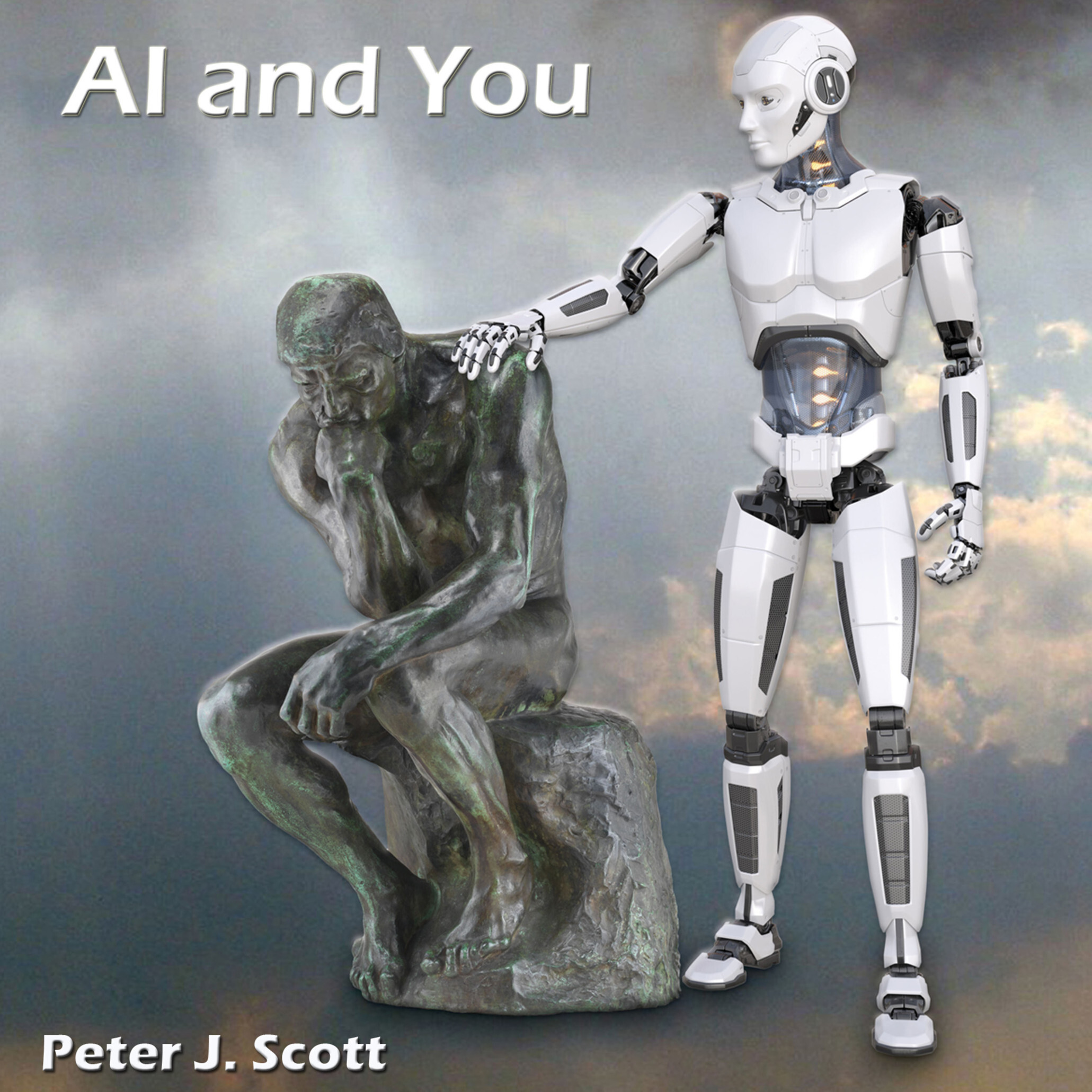
Artificial Intelligence and You

265 - Guest: Kate Hayles, Literary and Technological Analyst, part 1

14 Jul 2025

Description

This and all episodes at: https://aiandyou.net/ . It’s more important than ever to define just what we mean by words like intelligence, consciousness, and thinking. Here to help us is Kate Hayles, Distinguished Research Professor at the University of California at Los Angeles. Her research focuses on the relations of literature, science and technology, and a new theory of mind—what she calls an integrated cognitive framework (ICF)—that includes the meaning-making practices of lifeforms from bacteria to plants, animals, humans, and some forms of artificial intelligence. That’s the topic of her new book, Bacteria to AI:  Human Futures with our Nonhuman Symbionts. A symbiont is an organism living in symbiosis with another, with a closely-coupled mutual relationship between them. Kate’s other books include Postprint: Books and Becoming Computational, Unthought: The Power of the Cognitive Nonconscious, and How We Think: Digital Media and Contemporary Technogenesis. She has many fellowships, including two University of California Presidential Research Fellowships, and is a member of the American Academy of Arts and Sciences. We talk about the relationship between cognition and consciousness, and between cognition and computation; our dependency and codependency on technology; concepts like anthropocentrism and technosymbiosis, which Kate unpacks in the service of laying out a really novel way of thinking about thinking; and whether AI is thinking, or feeling. All this plus our usual look at today's AI headlines. Transcript and URLs referenced at HumanCusp Blog.        

Audio
Featured in this Episode

No persons identified in this episode.

Transcription

This episode hasn't been transcribed yet

Help us prioritize this episode for transcription by upvoting it.

0 upvotes
🗳️ Sign in to Upvote

Popular episodes get transcribed faster

Comments

There are no comments yet.

Please log in to write the first comment.