Menu
Sign In Search Podcasts Charts People & Topics Add Podcast API Pricing
Podcast Image

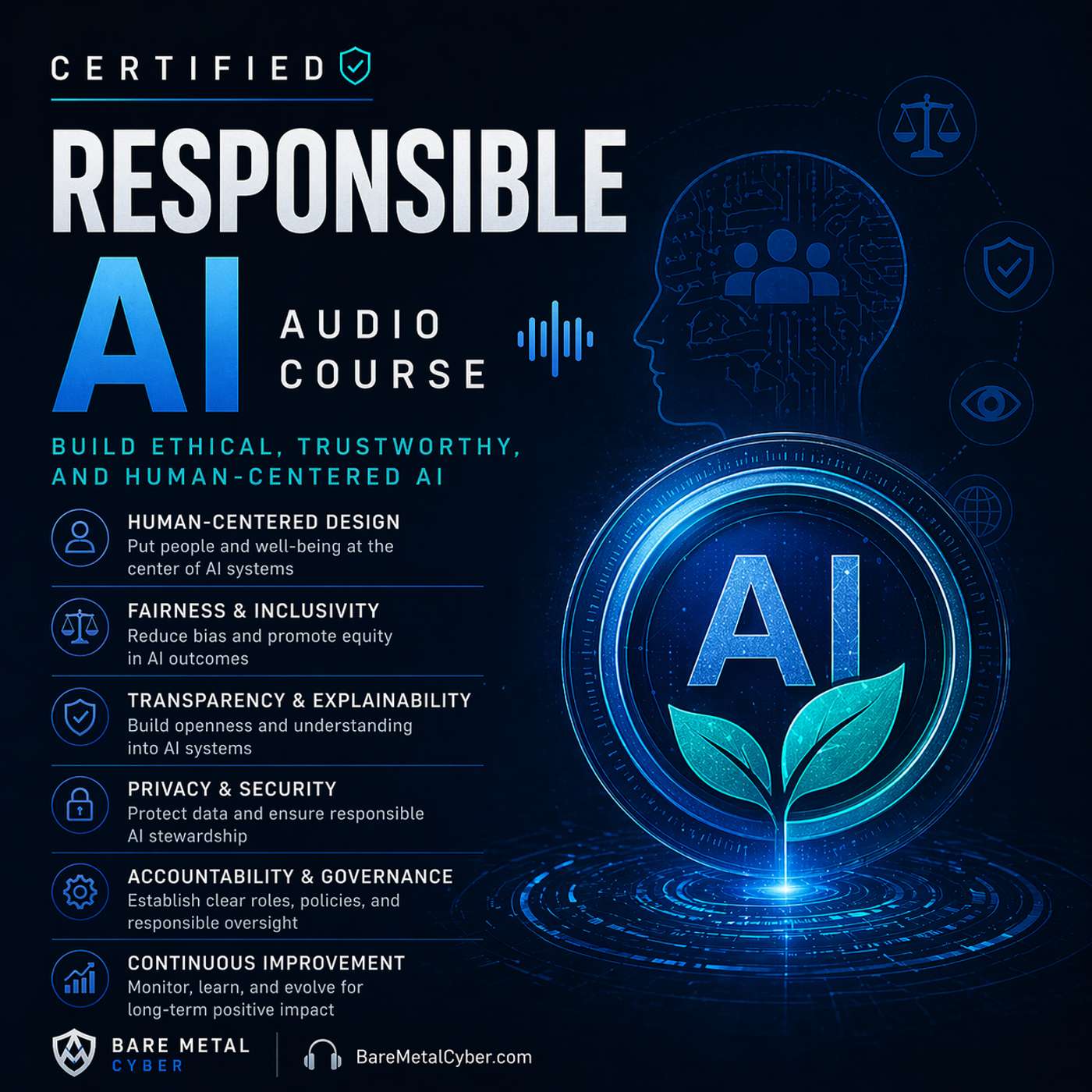
Certified - Responsible AI Audio Course

Episode 2 — What “Responsible AI” Means—and Why It Matters

15 Sep 2025

Description

Responsible AI refers to building and deploying artificial intelligence systems in ways that are ethical, trustworthy, and aligned with human values. This episode defines the scope of the concept, distinguishing it from broad discussions of ethics that remain abstract and from compliance programs that only address narrow legal requirements. Listeners learn how responsible AI bridges principles and daily practice, embedding safeguards throughout the lifecycle of design, data handling, training, evaluation, and monitoring. The importance of trust is emphasized as both an ethical obligation and practical requirement for adoption, since AI systems that lack credibility are quickly rejected by users, regulators, and the public.Examples illustrate how responsibility enables sustainable innovation by ensuring systems deliver benefits while minimizing unintended harms. The discussion covers fairness obligations in credit scoring, transparency needs in healthcare recommendations, and safety requirements in autonomous decision-making. Case references show how organizations that proactively embrace responsible practices avoid reputational crises, while those ignoring them face backlash and regulatory scrutiny. By the end, learners understand responsible AI not as an optional extra but as central to effective risk management, stakeholder trust, and long-term business viability. Produced by BareMetalCyber.com, where you’ll find more cyber audio courses, books, and information to strengthen your certification path.

Audio
Featured in this Episode

No persons identified in this episode.

Transcription

This episode hasn't been transcribed yet

Help us prioritize this episode for transcription by upvoting it.

0 upvotes
🗳️ Sign in to Upvote

Popular episodes get transcribed faster

Comments

There are no comments yet.

Please log in to write the first comment.