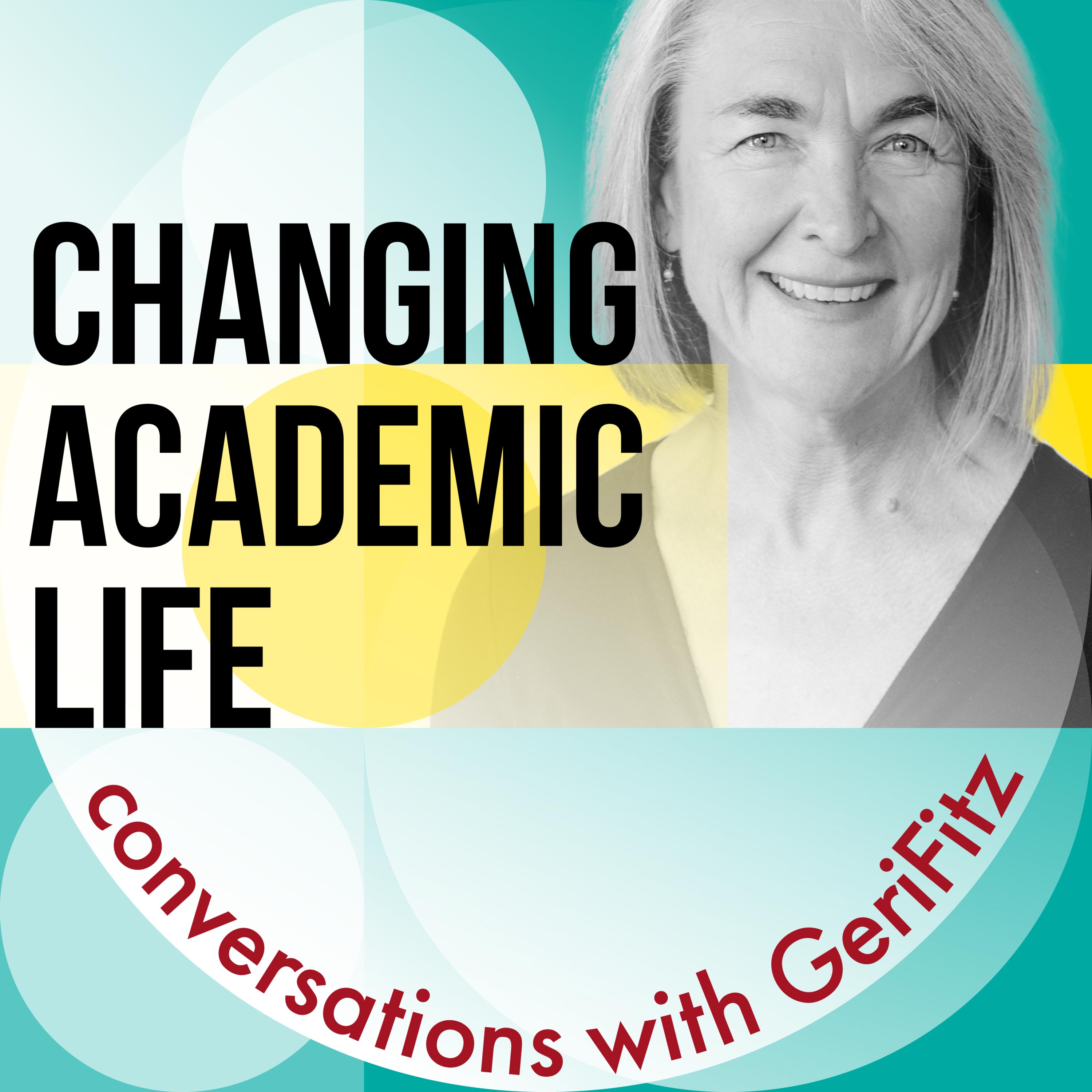
Changing Academic Life
Leysia Palen on creating a new research area, the long path to tenure and starting a department
12 Nov 2018
Leysia Palen is Professor and Founding Chair of Information Science at the University of Colorado Boulder. She has also led the establishment of the Crisis Informatics research area. Leysia shares her career journey in getting to this place, an amazing story of being a first generation PhD, dealing with imposter syndrome, and moving to a new university to support her spouse. It is also a story of focus and perseverance, defining a new research area, being supported by her own soft money, then finally getting a half-time faculty position, while at the same time having a family and growing the internationally recognised Project EPIC. It was only relatively recently that she got tenure and then quickly became a full professor. Leysia also talks the challenges and lessons learnt in setting up and leading a whole new department and what higher education can be in this era. “I was a trailing spouse…and the closest fit for me was Computer Science…but it wasn't an easy fit. […] It's important that both people [academic couple] be valuable in terms of how other people measure value.” “The truth was I still was uncertain if I belonged in the academy. […] I was smarter than I knew and I was more naive than I knew.”“To do research and to do teaching, you have to just be present all the time. You have to stay with a problem. You have to stay with other people and where they are. And that's a particular kind of energy .”“It's naive to think science is only about pursuing ideas that just come to one's head. They have to be good ideas, they have to be tractable ideas.”For a full transcript, click here. Overview:02:45 Being a first generation college student, undergrad at UCSD and PhD at Irvine08:51 Moving to Colorado CS department as a trailing spouse, focusing on keeping the research thread going11:34 Working in soft money, needing to reduce work to what she could do well while she was having children15:08 Moving to a half-time tenure track position, trying to deal with not being a close disciplinary fit, moving to formalize research to make a difference18:23 Setting up a crisis informatics research agenda, and getting it funded23:16 The challenges doing crisis informatics work and self care27:07 Eventually getting tenure, the challenges getting there, and juggling family, physical movement, and home/work, getting a full-time position in 2007 but still not tenured, eventually went for associate without tenure, then later with tenure. And then in a short time to full professor.35:06 Being noticed by the campus for the impact she was having, the multi-disciplinary group, graduating 7 PhD students all women. Setting up a new department of information science. The opportunity to think about the nature of disciplines, what an ischool in 2015 could be like, and re-thinking education.42:34 Learning to be a leader, no training pathways for leadership or role models for setting up a new department, and defining discipline vs department.52:21 Final reflections and working with a 50 year view. 56:51 EndRelated LinksDepartment of Information Science - https://www.colorado.edu/cmci/infoscience Palen & Anderson, 2016, Crisis Informatics – New data for extraordinary times, Science.
No persons identified in this episode.
This episode hasn't been transcribed yet
Help us prioritize this episode for transcription by upvoting it.
Popular episodes get transcribed faster
Other recent transcribed episodes
Transcribed and ready to explore now
3ª PARTE | 17 DIC 2025 | EL PARTIDAZO DE COPE
01 Jan 1970
El Partidazo de COPE
Buchladen: Tipps für Weihnachten
20 Dec 2025
eat.READ.sleep. Bücher für dich
BOJ alza 25pb decennale sopra 2%, Oracle vola con accordo Tik Tok, 90 mld eurobond per Ucraina | Morning Finance
19 Dec 2025
Black Box - La scatola nera della finanza
365. The BEST advice for managing ADHD in your 20s ft. Chris Wang
19 Dec 2025
The Psychology of your 20s
LVST 19 de diciembre de 2025
19 Dec 2025
La Venganza Será Terrible (oficial)
Cuando la Ciencia Ficción Explicó el Mundo que Hoy Vivimos
19 Dec 2025
El Podcast de Marc Vidal