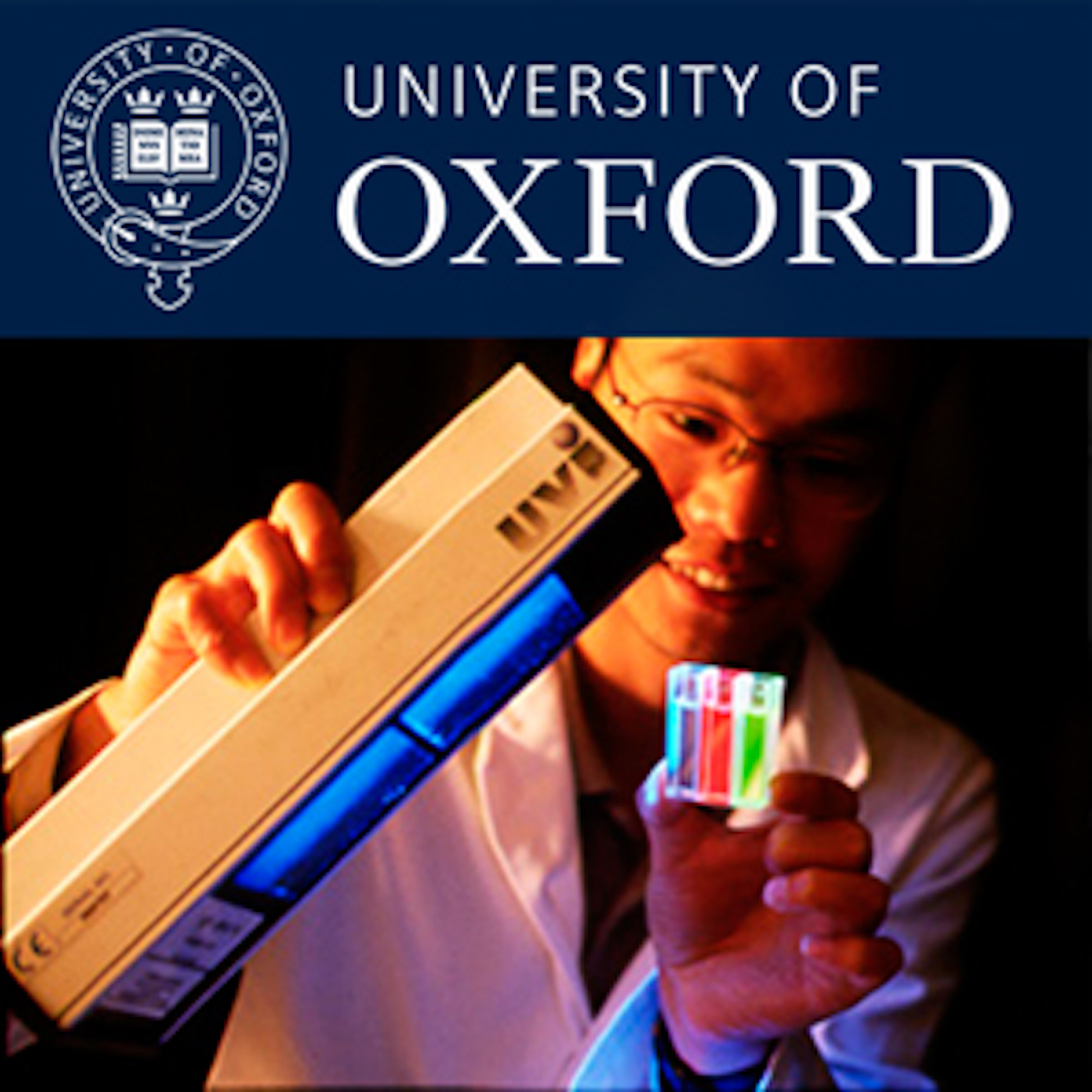
Christmas Science Lectures
Carrots, spiders and red salt – a fascination with light capture in biology
15 Dec 2015
Using physics, chemistry and biology, the fascination with light capture in nature will be explained in a multi-coloured and animated well – prepare for six-eyed spiders, purple carrots and red salt. One of the most complex organs in higher life forms is the eye – even Charles Darwin commented that evolution of the eye by natural selection at first glance seemed "absurd in the highest possible degree”. Many living things on earth, from the most simple of single cell organisms to humans, respond to light using a chemical compound that appeared around 400 million years ago – the compound is called retinal. Biology has evolved and exploited this compound using some of the most fundamental principles of physics in ways that are so incredible, that the topic still fascinate scientists today. For more information about the lecturer's work please go to: http://www.bioch.ox.ac.uk/aspsite/index.asp?pageid=603 Our eyes can detect huge ranges of light, at a resolution and precision that far escapes any known man-made device. Even simple organisms that use retinal produce electrical energy from the sun at efficiencies that far exceed any solar cell. And to add to these amazing observations, light detection in nature occurs faster than in any man-made device.
No persons identified in this episode.
This episode hasn't been transcribed yet
Help us prioritize this episode for transcription by upvoting it.
Popular episodes get transcribed faster
Other recent transcribed episodes
Transcribed and ready to explore now
3ª PARTE | 17 DIC 2025 | EL PARTIDAZO DE COPE
01 Jan 1970
El Partidazo de COPE
Buchladen: Tipps für Weihnachten
20 Dec 2025
eat.READ.sleep. Bücher für dich
BOJ alza 25pb decennale sopra 2%, Oracle vola con accordo Tik Tok, 90 mld eurobond per Ucraina | Morning Finance
19 Dec 2025
Black Box - La scatola nera della finanza
365. The BEST advice for managing ADHD in your 20s ft. Chris Wang
19 Dec 2025
The Psychology of your 20s
LVST 19 de diciembre de 2025
19 Dec 2025
La Venganza Será Terrible (oficial)
Cuando la Ciencia Ficción Explicó el Mundo que Hoy Vivimos
19 Dec 2025
El Podcast de Marc Vidal